

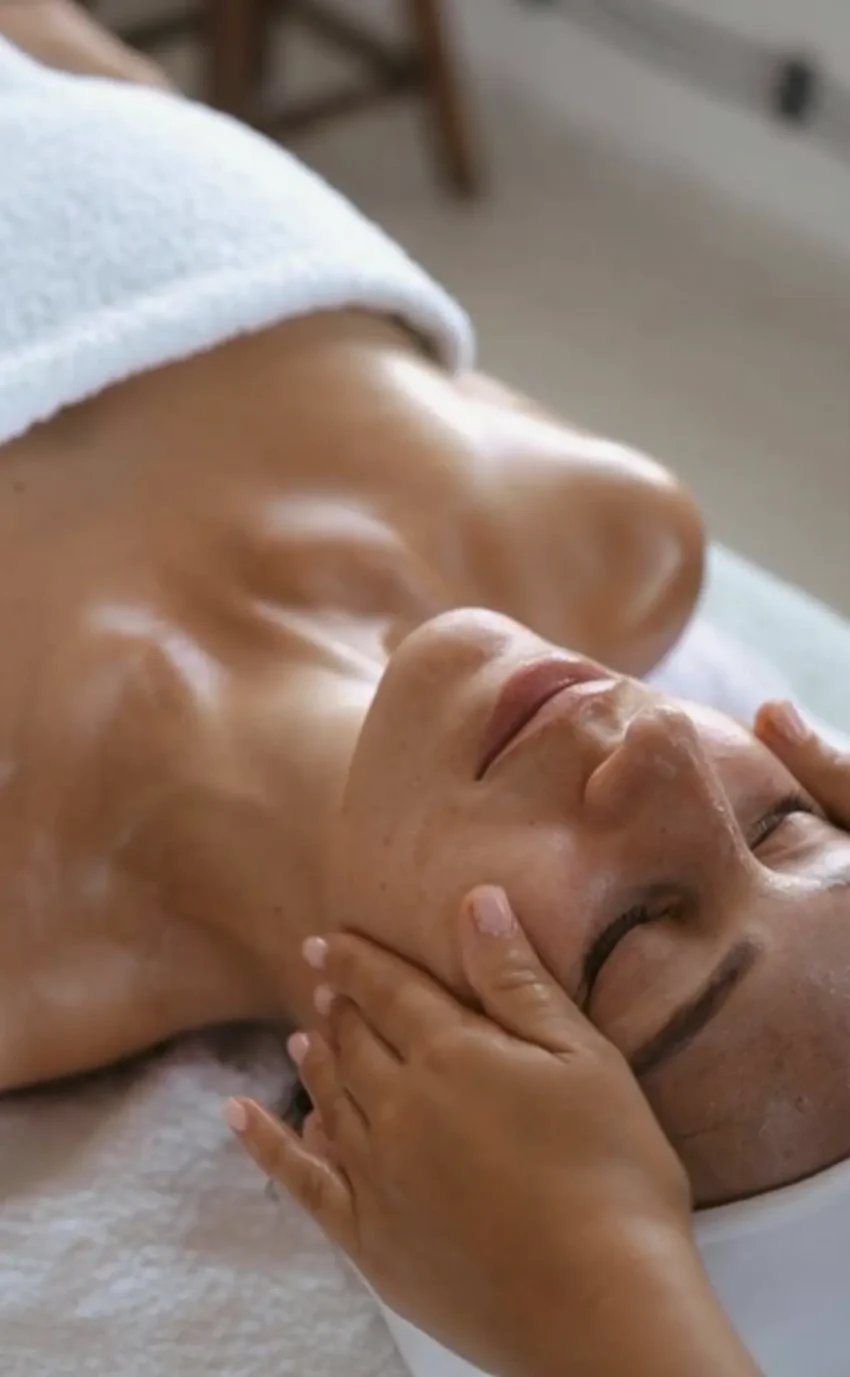
Why does my face feel ‘sore’ or ‘bruised’ after a professional sculpting session? There’s a common question we get asked here at The Facial Hub, especially after clients have had their first deeper treatment. And to be honest, the answer is yes – a bit of soreness can be quite normal (particularly if you’re one of those people who tends to hold a lot of tension in your facial muscles or has a backlog of fluid congestion, or has a sluggish lymphatic system).
In my experience as the founder of The Facial Hub, I can tell you this sensation is usually just your muscles being mobilised, your connective tissue being worked, and your lymphatic flow being given a bit of a boost. Think of it like your face is saying, “Hey, we’ve been using those muscles for years, and we’re a bit stiff and sore from it”.
Lots of our Brisbane clients come to us for face sculpting post-treatment double chin, mainly because puffiness and jaw tension are making their profiles look a bit off. But there’s a difference between a bit of post-treatment tenderness and discomfort that actually needs some attention. So let’s break it down properly.
Contents
- 1 What Happens During A Professional Session
- 2 Why Tenderness Can Happen Afterwards
- 3 How To Tell What Is Normal
- 4 Brisbane Climate And Why It Can Feel Stronger
- 5 Who Tends To Feel More Sensitive
- 6 Smart Aftercare For Faster Recovery
- 7 Can A Quality Treatment Leave Marks?
- 8 Why Skilled Hands Matter In 2026
- 9 When To Reach Out For Advice
- 10 My Honest Studio Perspective
- 11 Curious If This Is Right For You?
- 12 FAQ
What Happens During A Professional Session
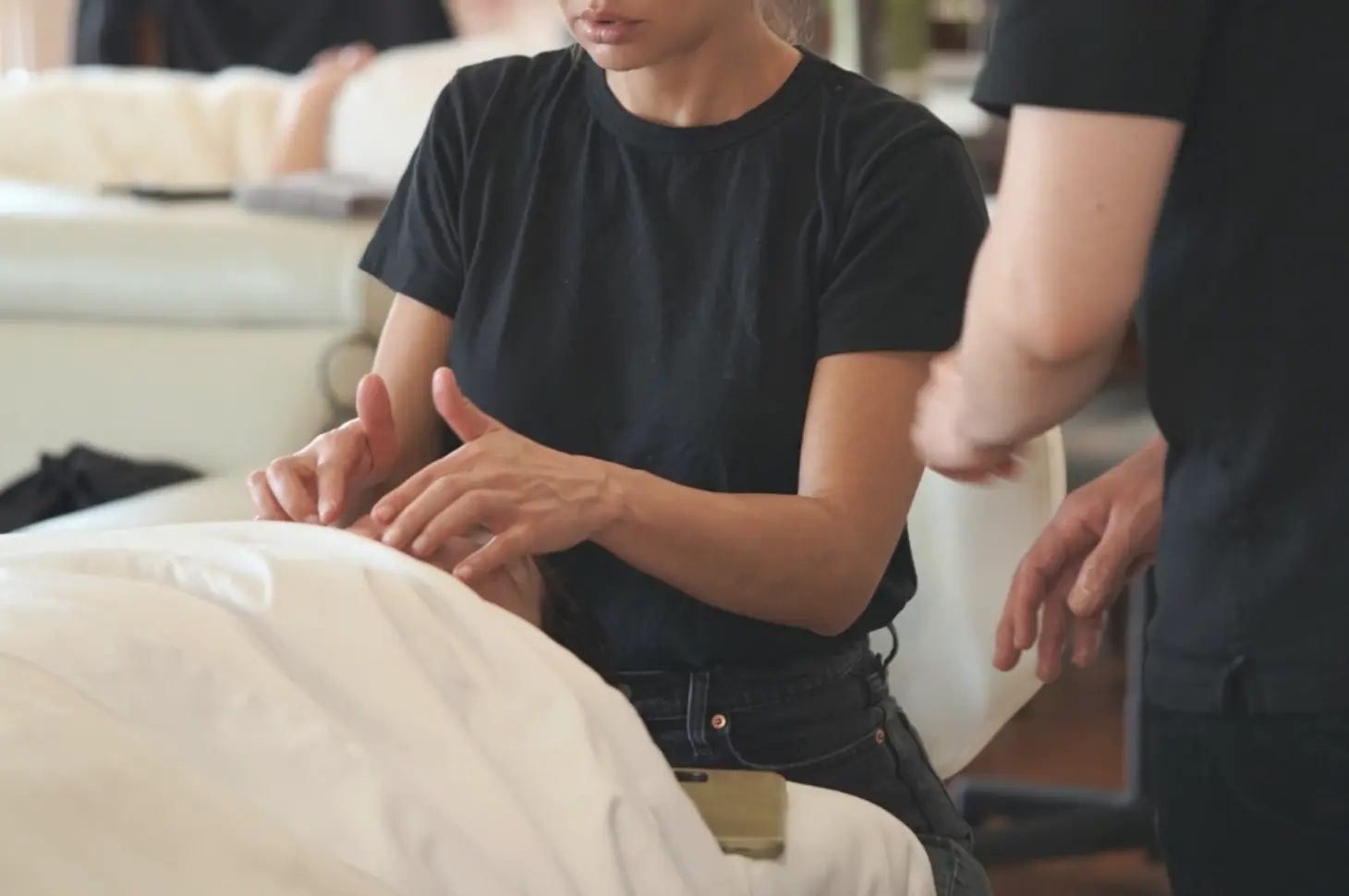
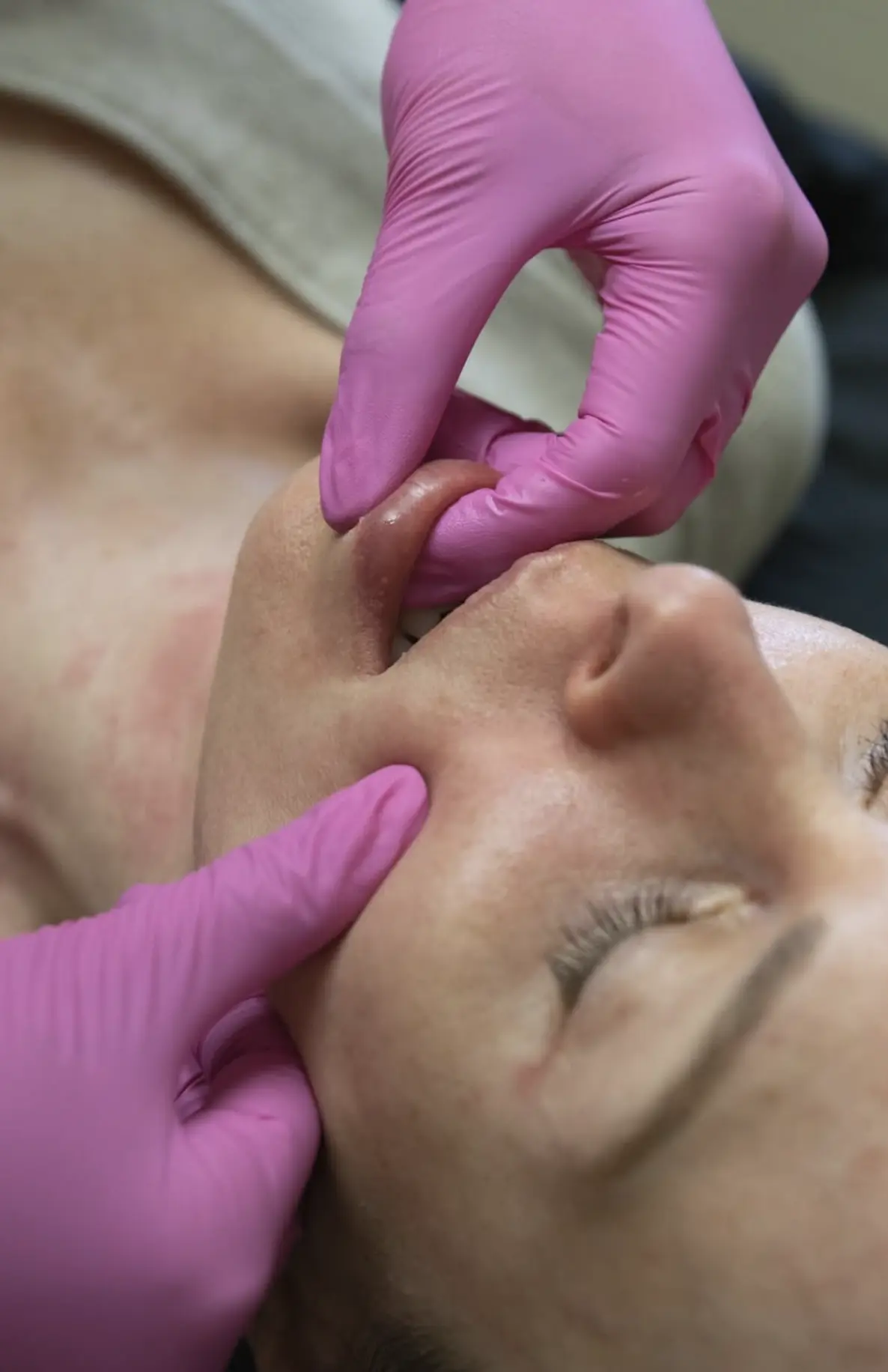
A professional facial sculpting session is a lot more involved than just slapping some cream on and hoping for the best. A good treatment uses specific techniques to lift, drain, release tension and get the blood flowing in your face, jaw, neck and scalp.
In a session, we often work on areas that are storing up stress quietly:
- The jaw muscles from clenching your jaw all the time
- Your brow area from all the screen time you’ve been doing
- The temples from headaches
- Neck bands from years of bad posture
- Cheeks, where all that water retention and puffiness likes to hang out
A good session may also support your lymphatic system by helping to move lymph through the superficial pathways. Now I know beauty marketing loves to throw around the word ‘detox’, but what we’re actually doing is supporting your body’s natural circulatory pathways.
According to a 2026 beauty and wellness market report, there’s a growing demand for manual facial therapies as people seek non-invasive, low-impact treatments without harsh procedures or injectables. It’s not hard to see why – a lot of people don’t want to have to freeze their face in place to get results.
When those tissues get well and truly worked, it can give you a bit of temporary soreness.
Why Tenderness Can Happen Afterwards
You’ve got a face that’s home to over 40 muscles – they’re the behind-the-scenes crew when it comes to expressions, chewing, blinking, talking and, of course, keeping your posture upright all day long. But what happens when those workhorses get overworked and neglected for too long – they get tight, sore and possibly even tender.
Muscle Release After Long-Term Tension
Now, if you’re someone who tends to clench your jaw, grind your teeth or furrow your brow while concentrating, those muscles are probably run ragged. And after some treatment, they can feel pretty sore – not dissimilar to that post-gym muscle ache when you’ve been getting back into the swing of things.
Fascia Being Mobilised
Fascia, the connective tissue that wraps around your muscles, can get restricted – this can lead to all sorts of problems, like tightness, puffiness, and a general stiffness that makes it hard to move freely. But with some skilled sculpting techniques, or a good fascia massage, you can start to restore that smooth movement and softness, so it’s no longer tight and constricted.
Improved Circulation
When you get some treatment, it gives your circulation a bit of a wake-up call – gets those blood vessels unblocked, brings oxygen and nutrients in and gets the whole shebang flowing better. And that can leave you feeling a bit worked, a bit warm and possibly a bit tender in the process.
Fluid Movement And Drainage
If you’re the type of person who wakes up feeling puffy, or you get sinus congestion, or you find yourself retaining fluid for no apparent reason, then manual lymphatic drainage style techniques might well leave you feeling a bit tender for a short while – but that’s just your body responding to all that stagnant fluid finally getting shifted out of there and through your lymphatic vessels and nodes.
Mild Inflammatory Response
And let’s face it – any sort of hands-on treatment is likely to get a bit of a reaction out of your body. Inflammation can kick in for a little while, but it’s usually short-lived and passes pretty quickly.
How To Tell What Is Normal
A bit of tenderness is one thing. True bruised pain is another. Here’s how I explain it in the clinic.
| Sensation | Usually Normal? | What It Feels Like | Timeframe |
|---|---|---|---|
| Mild tenderness | Yes | Like muscles after exercise | 24–48 hours |
| Jaw awareness | Yes | Worked or tired chewing muscles | 1–2 days |
| Slight puffiness | Yes | Temporary fluid shift | Same day |
| Light redness | Yes | Increased circulation | Few hours |
| Sharp pain | No | Pinching, stabbing, intense pain | Needs review |
| Visible bruising | Sometimes | Fragile capillaries or pressure sensitivity | Check therapist |
| Headache lasting days | No | Ongoing strain or dehydration | Needs review |
Minor tenderness isn’t unheard of. Deep tissue bruising, really bad swelling, those weird circular marks, or lingering discomfort in the area won’t be typical, and it’s worth a second look.
If pain is super bad, getting worse, or just won’t budge beyond 72 hours, it’s time to pay a visit to your therapist or GP to get some advice. If you already have some health issues like swollen lymph nodes, swelling that just won’t go away, or if you have any of those pesky metal medical devices in the area being treated, do yourself a favour and get some advice before booking a session.
Brisbane Climate And Why It Can Feel Stronger
Living in Brisbane has its own special set of challenges. The heat and humidity, dehydration from all that heat, being blasted by air-con, and getting blasted by UV can all make a real difference in how your body responds.
I get a lot of clients coming in with sausage-like faces from all the salt they’re eating, really tight jawlines from stressful weeks, and skin that’s begging for water – despite it being stinkin’ hot and humid outside. And that’s even before you factor in the state of your desk posture and phone-neck from staring at screens all day. No wonder it can all feel a bit creaky.
The heat and the great outdoors also have a say in the matter. Getting caught out without adequate sunscreen after treatment is a no-no, especially if your skin is looking rosy or sensitive.
So when we finally do get to release those areas, the sensations can be a bit more apparent than you’d think.
Melbourne clients, on the other hand, often have that winter dryness and wind blowing off the ocean. It’s a different climate, and a different story altogether.
Who Tends To Feel More Sensitive
Some people bounce out of the clinic looking like they’re glowing. Others feel like they’ve just had a slight workout for their face.
If you notice more tenderness, you might want to think about when the last time you had a decent night’s sleep was, when the last time you went for a massage was, whether you grind your teeth at night, whether you retain water easily, or whether you are fighting the effects of dehydration. And if you have particularly sensitive skin types to boot, or are just not getting the sleep you need, you may feel it a bit more after a session.
And people who are actively changing their fitness routine, dealing with stress, or have just gone through a major weight loss, tend to find their tissues feel a bit more reactive, too.
In the clinic, I’ve found that people who swear they don’t hold any tension at all are usually the ones whose masseter muscles tell a very different story.
Smart Aftercare For Faster Recovery
Aftercare really makes a difference to how you feel the day after. Good post-care instructions and regular habits can make all the difference to your comfort levels and help your body get back to normal.
Helpful Post-Treatment Steps To Follow
Drink plenty of water throughout the day – it’s essential to keep yourself hydrated. Opt for light meals built around whole foods, whole grains, and lean proteins like chicken breasts. If you’ve got a sweet tooth, then reach for colourful produce rich in vitamin C instead. Many of our clients also really like herbal teas and foods rich in Omega-3 fatty acids to support their recovery.
If your face is feeling warm or puffy, you can use a cold compress and keep your skincare routine gentle. You should also be careful not to overdo it with heavy activities like yawning, and take it easy by resting your jaw in a comfortable position. Sleeping with your head slightly elevated can also be helpful, and some people find gentle neck stretches useful, too.
What To Avoid Post-Treatment
Try to steer clear of overloading your system with heavy meals, processed foods, processed snacks or ultra-processed foods in the first 24 hours after treatment. You should also be careful with excessive sugary drinks, sugary foods, and refined sugar, as these can make puffiness worse for some people.
Skip greasy takeaways, fried food, deep-fried foods, hot saunas or hot showers if you’re already feeling flushed – a lukewarm shower is usually a kinder option. Avoid aggressive tools, DIY fascia blasting or heavy self-massage in the first few days after treatment.
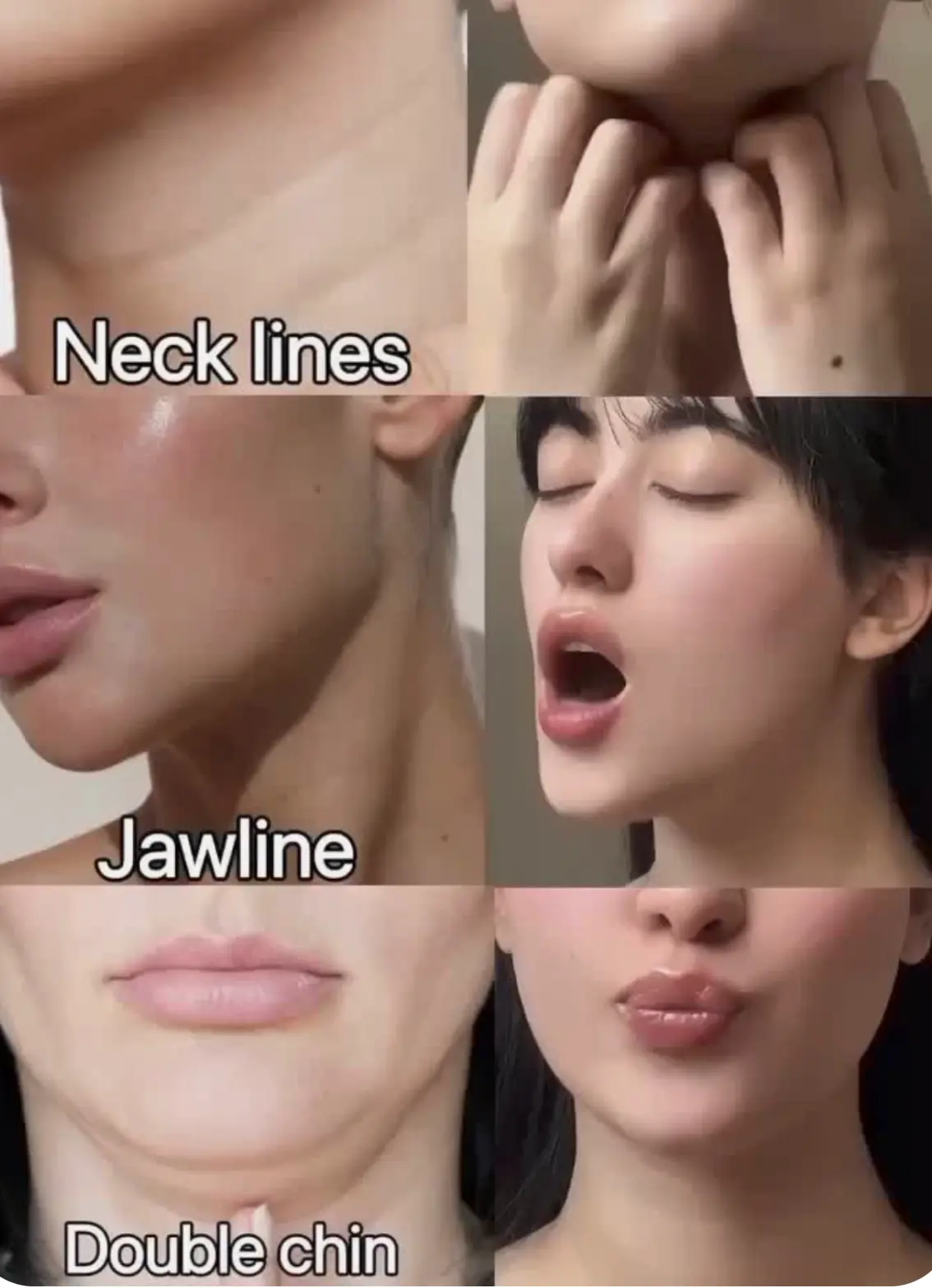
If you’re trying to get a sharper lower face, then face sculpting double chin treatments can help by supporting lymph flow and reducing temporary fluid retention when done consistently across several treatment sessions.
Can A Quality Treatment Leave Marks?
True bruising is pretty rare if the treatment is done properly, but it can happen from time to time.
It’s more likely to happen if you:
- Have fragile capillaries
- Are you taking blood-thinning medication (medical advice applies)
- Bruise easily in general
- Have you had cosmetic injectables recently
- Have inflamed acne or a compromised skin barrier
- Had a treatment elsewhere that was a bit too aggressive
At The Facial Hub, we take our hygiene standards, pressure control and therapist qualification very seriously. We never believe that results should come from being rough.
Why Skilled Hands Matter In 2026
More and more of our clients are moving away from extreme devices and viral DIY trends, and in 2026, that’s completely understandable.
We’ve seen enough botched gua sha bruising tutorials, face-taping disasters, and ten-step routines attacking the skin barrier. We also see a lot of confusion between facial sculpting and body trends like body contouring, fat freezing, ultrasound cavitation, radiofrequency energy and laser-based treatments.
Those services are targeting different concerns and are not the same as manual facial therapy.
Professional sculpting, done properly, respects anatomy, lymphatic health, skin condition, nervous system regulation, and realistic outcomes.
Sometimes the smartest beauty move is to ditch the gadgets and go with skill.
When To Reach Out For Advice
If you experience any of the following, please don’t hesitate to get in touch:
- Pain increases after 24 hours
- Visible bruising spreading
- Persistent swelling
- Headaches that don’t go away
- Numbness or tingling
- Skin irritation or rash
- Jaw locking or difficulty chewing
Any qualified massage therapist should always be happy to answer your aftercare questions.
My Honest Studio Perspective
Some of the best outcomes I see come from clients who at first say something like: “I had no idea my face was as tense as all that“. That first massage session can reveal years of strain that’s been hiding out.
A Brisbane client with chronic jaw clenching felt pretty sore for a couple of days after her first treatment, then noticed fewer headaches, a softer jaw, and better sleep by week two. That’s the kind of progress I like to see – not all about flashy before-and-after shots taken under dodgy lighting.
Good results usually come from sticking with it, day in, day out, not just ‘giving it their all‘ for an hour.
Curious If This Is Right For You?
If you’re not sure whether facial sculpting is up your alley, with your face shape, tension patterns, or skin sensitivity, visit The Facial Hub, and we’ll have a real chat about it. No pressure, no sales pitch, no pretending every treatment is a good fit for every single person.
Sometimes your face doesn’t need more gadgets, it needs less stress, better blood flow and support for its natural repair process.
FAQ
Do I normally feel sore the day after a session?
Yep. Mild soreness for the first 24 to 48 hours is pretty normal – especially after your first appointment or if you’re a jaw clencher.
Should it hurt during the treatment?
No. You might feel a bit of a twang in tight spots, but the session should be comfortable and adjustable.
Why does my jaw feel worked to death the next day?
Those masseter muscles often get a raw deal from clenching, chewing, or stress. Releasing them can feel a bit like the day after a tough workout.
Can I end up with a few marks afterwards?
It’s not super common, but it’s possible – especially if you have fragile capillaries, are on certain meds, or if your therapist’s pressure is a bit too firm.
What helps me chill out quicker?
Drink plenty of water, eat well, avoid inflammatory foods, rest your jaw, slap a cold compress on it if you need to, and follow your therapist’s aftercare advice to the letter.