
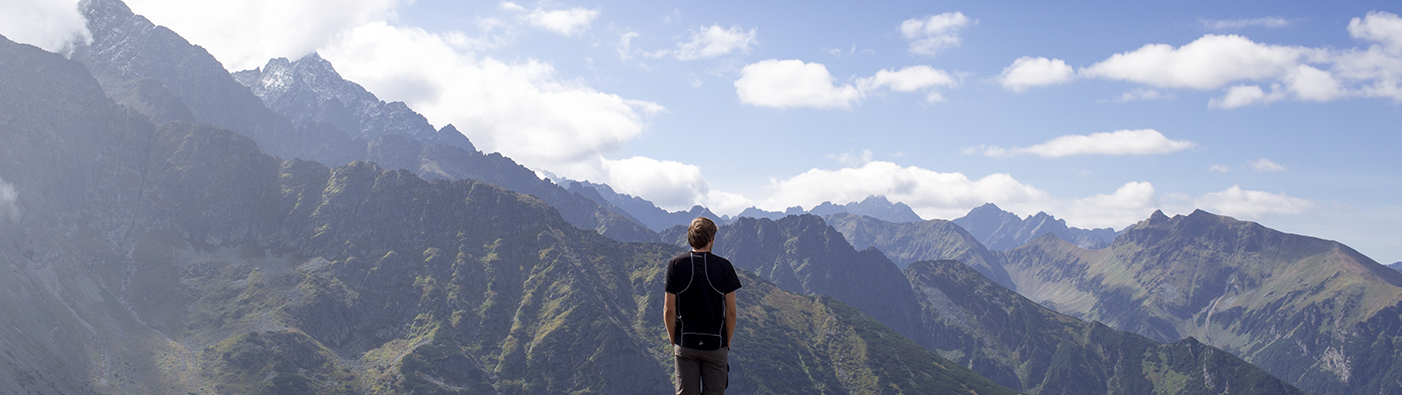
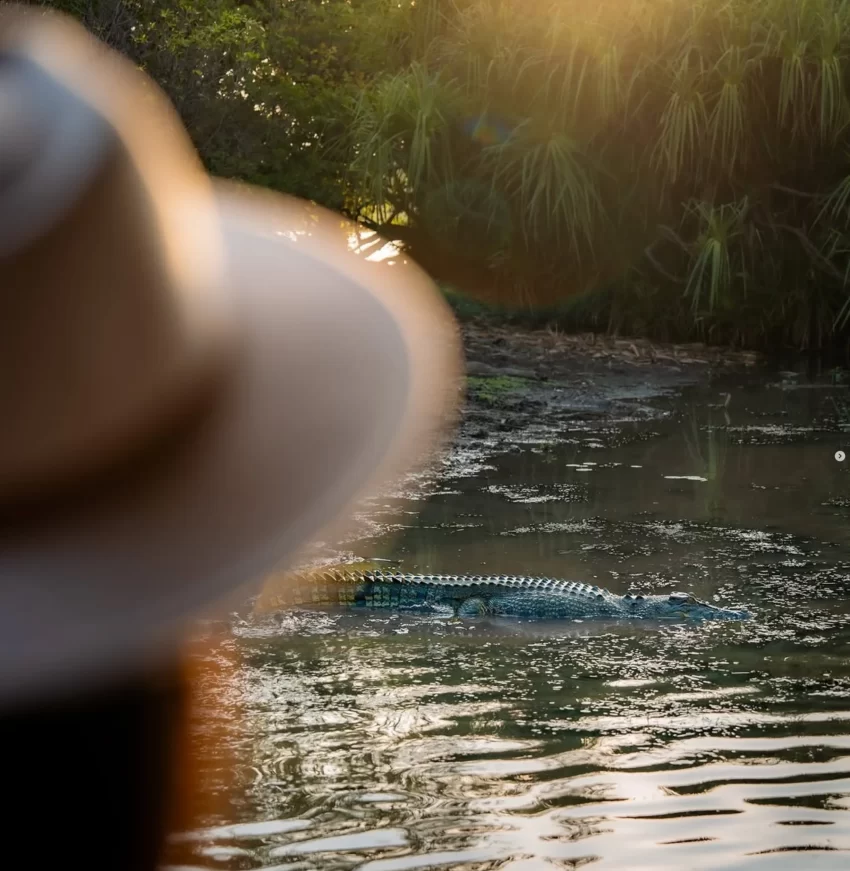
Kakadu National Park in the Northern Territory is a UNESCO World Heritage site famous for its stunning landscapes, rich Indigenous culture and wildlife. If you’re planning an Australian trip you need to dress appropriately for comfort, safety and enjoyment. Whether you’re visiting Jim Jim Falls, Gunlom Falls or Nourlangie Rock and Ubirr Rock here’s a comprehensive guide on what to wear when visiting Kakadu National Park.
Clothing for the Climate
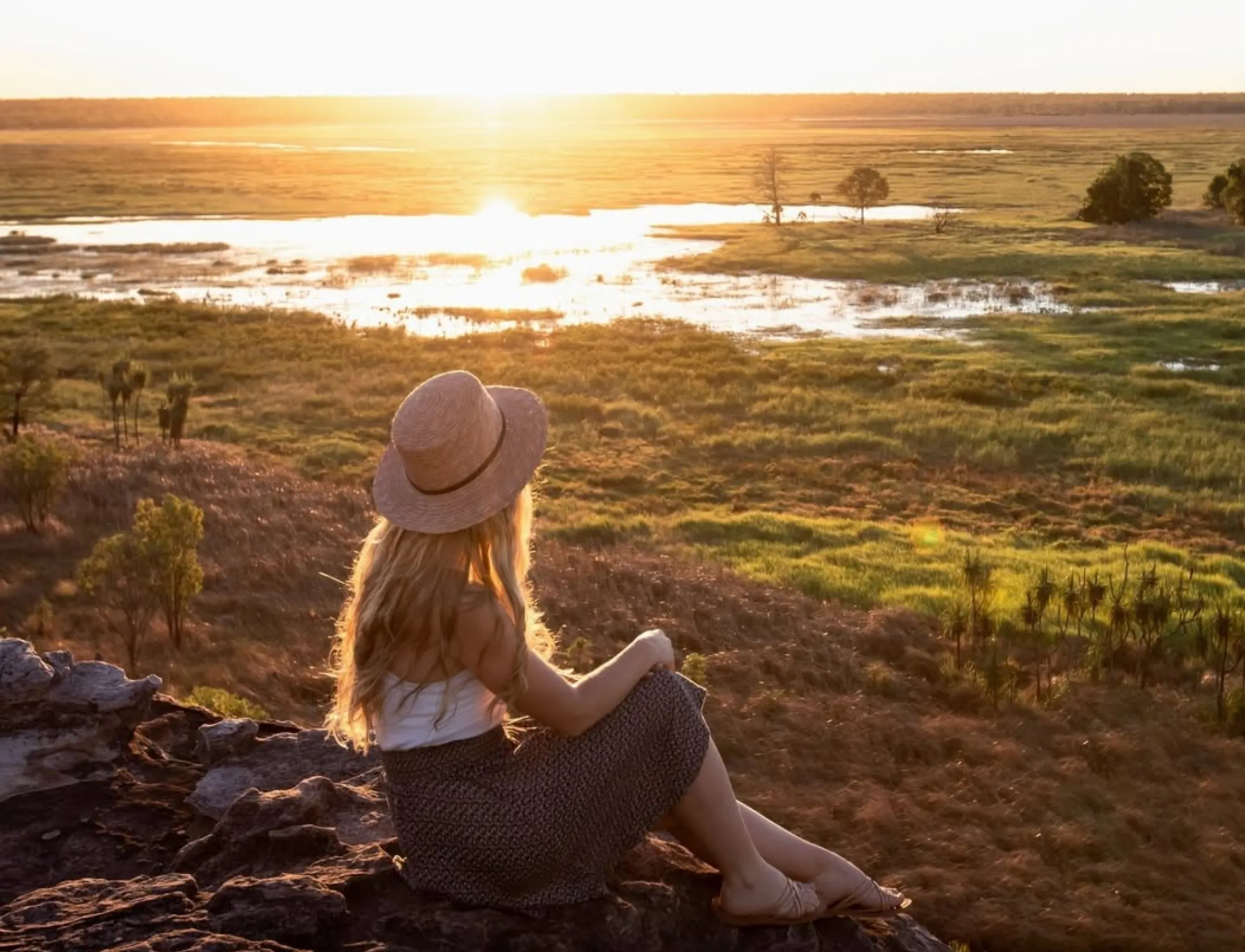
Kakadu has a tropical climate with two seasons: the Wet Season (November to April) and the Dry Season (May to October). Your clothing choices should match the season you are visiting.
- Dry Season: Expect warm days (25-35°C) and cool nights. Lightweight, breathable clothing made from natural fibres like cotton and linen is perfect. Long-sleeved shirts and long pants will help protect you from the sun and insect bites. A broad-brimmed hat is essential for sun protection.
- Wet Season (Rainy Season): Expect high humidity, temperatures above 30°C and rain. Quick-dry clothing and moisture-wicking fabrics are recommended, plus a waterproof jacket or poncho. The wet season trip requires extra precautions due to wet rocks and slippery walking trails.
Must Haves

Regardless of the season, these are the must-haves:
- Broad-brimmed hat: Protects from intense sun and helps regulate body temperature.
- Sunglasses: Protect your eyes from UV.
- Long sleeved lightweight shirt: Prevents sunburn and insect bites.
- Quick-dry shorts or pants: Comfortable for walking and exploring rock formations and walking trails.
- Comfortable walking shoes or sturdy shoes: Closed toe shoes or hiking boots for trails and Aboriginal land sites.
- Waterproof jacket (if visiting during the Wet Season): To keep you dry in case of sudden rain.
Many visitors opt for day trips Darwin to Kakadu, which requires packing wisely for a full day of adventure.
Footwear
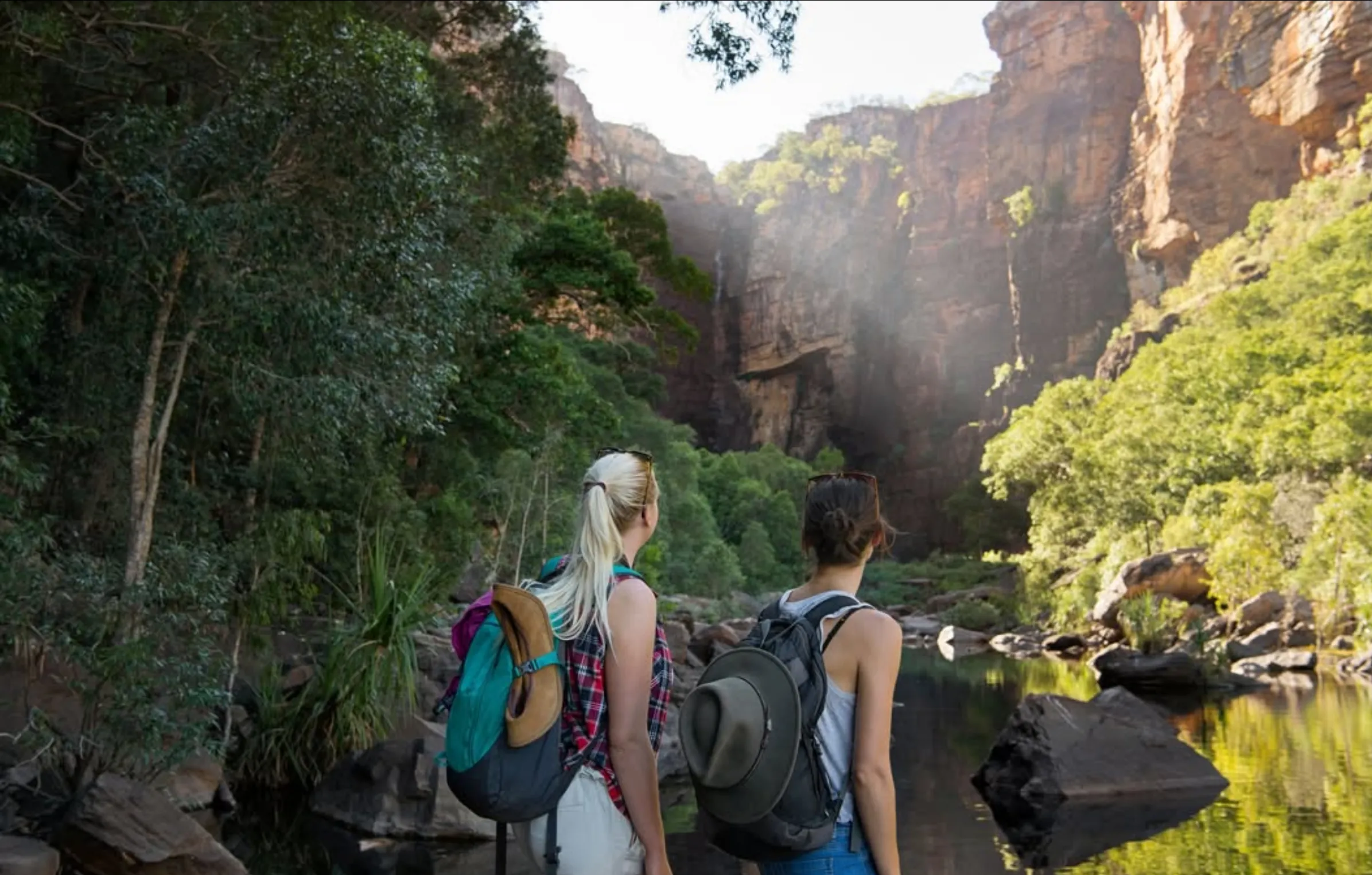
Kakadu has rocky escarpments and wetlands, so footwear is key:
- Hiking boots: For long treks, moderate fitness level trails and uneven terrain.
- Lightweight sneakers: For general walking and sightseeing.
- Water shoes or sandals: For swimming spots and water crossings at Twin Falls, Florence Falls, Wangi Falls and other freshwater plunge pools.
If you’re on a Darwin Kakadu tour, comfortable and durable footwear is a must to enjoy the diverse landscapes without discomfort.
Sun Protection and Accessories
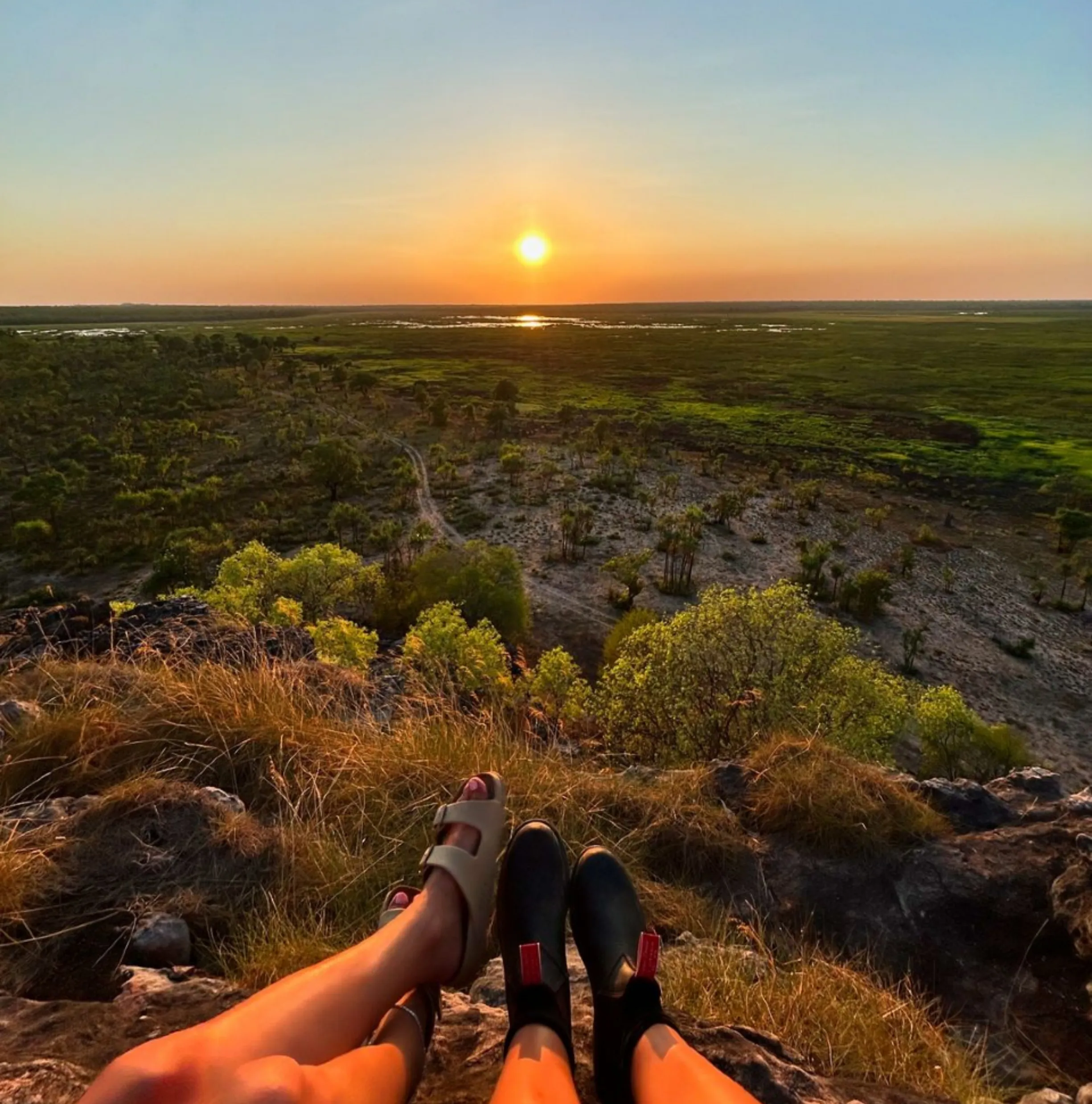
The Australian sun is harsh, so sun protection is a must:
- Broad-spectrum sunscreen (SPF 50+)
- Lip balm with SPF
- Insect repellent (DEET or natural alternatives) for mosquito protection
- Refillable water bottle or plenty of water to stay hydrated
- Light scarf or buff to protect your neck from the sun
- Soaka Hat for extra heat protection
- Bug spray for extra mosquito protection
What to Wear for Special Activities
- Hiking & Exploring Kakadu Super Circle: Moisture-wicking, breathable clothing and sturdy walking shoes.
- Swimming at Amazing Waterfalls: Swimsuit underneath your clothing for easy changing and water shoes for rocky areas. Gunlom Falls and Barramundi Gorge are must-sees.
- Wildlife Cruise on Yellow Water Billabong or East Alligator River: Wear light, comfortable clothing with sun protection for spotting water lilies and native wildlife.
- Cultural Significance Tours at Nourlangie Rock & Ubirr Rock: Bring comfortable walking shoes and a travel towel for a day trip.
If you’re doing Kakadu day tours, packing right will ensure you stay comfortable and protected throughout the day.
Packing Tips
- Layer up for temperature changes.
- Neutral earth tones blend in with the environment and do not attract insects.
- Extra socks and dry bags to keep essentials dry.
- Adventure clothing for dirt roads, access roads and accessible dirt roads in the Northern Territory.
- Travel insurance and trip planning advice.
- Powered camp or exclusive safari camp as part of your accommodation.
- Safe distance from creek mouths and water marks to avoid risks.
- Camping gear, pack covers and pack floats for longer trips.
- Warmer clothes for nighttime.
- Strict luggage limit for safe business and excess luggage policies.
If you are joining Kakadu tours from Darwin, pack light but include all essentials for the day.
Conclusion
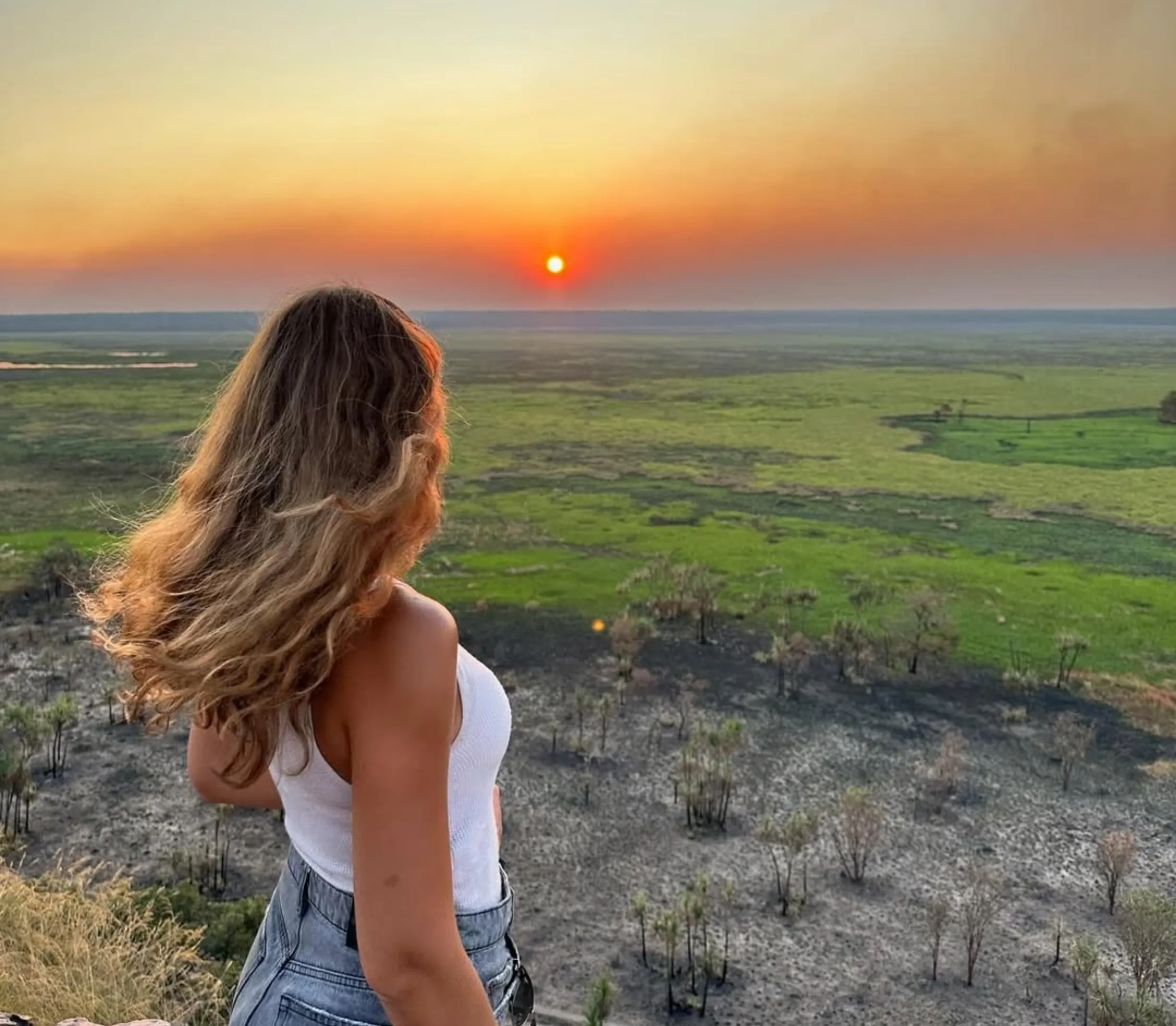
Dressing for Kakadu National Park will make you more comfortable and allow you to enjoy the views. Whether you are looking out from the Arnhem Land escarpment, walking across the Mary River Wetland or admiring the sandstone cliffs of Tolmer Falls, lightweight protective clothing, sturdy boots, and sun protection will make for a great adventure.sun protectionDressing for Kakadu National Park will make you more comfortable and allow you to enjoy the views. Whether you are looking out from the Arnhem Land escarpment, walking across the Mary River Wetland or admiring the sandstone cliffs of Tolmer Falls, lightweight protective clothing, sturdy boots, and sun protection will make for a great adventure.
An Australian tourism business thrives on showcasing the cultural and natural values of places like Kakadu. Prepare well, stay hydrated and get amongst it! With many tours to Kakadu to choose from, proper preparation will get you the most out of this amazing place.
FAQs
When is the best time to visit Kakadu National Park?
The best time is the Dry Season (May to October) when it’s cooler and more accessible for waterfalls, walking trails and cultural sites.
Do I need to be very fit to explore Kakadu?
Moderate fitness is required, especially for walking trails and longer treks. Some areas like Jim Jim Falls require rock climbing and uneven terrain.
Can I swim in Kakadu’s waterfalls and plunge pools?
Yes, in designated areas like Gunlum Falls, Maguk and Florence Falls. Always check for water safety updates due to crocodile risks.
What do I bring for a day trip to Kakadu?
For Kakadu day trips, pack breathable clothing, hat, walking shoes, sunscreen, insect repellent, refillable water bottle and camera to capture the views.
Are there guided tours from Darwin to Kakadu?
Yes, there are tours to Kakadu from Darwin, from day trips to multi-day trips to explore the ancient landscapes, waterfalls and rock art sites.