
In the case of Scalp Micropigmentation in Australia, one can expect surface healing to be apparent in some seven to 14 days for most, with the skin and pigment taking up to six weeks to fully settle. Recovery is not without its course of redness, tenderness, some swelling, scabbing or crusting, flaking and an interim fading.
I am Simon Redcliffe and I have no time for glossy promises; my advice is meant to be practical. The outcome is a matter of your skin, the practitioner you choose, the treatment area, how you look after it and the climate we have here in Australia. What follows is an account of what typically transpires in the wake of a session, the right time to put on the exercise shoes or wash the scalp and the reason for having a touch-up once things have stabilised.
An Overview of the SMP Timeline
You will find the healing timeline more straightforward if you can tell the difference between normal changes and those that warrant a call to your practitioner. See healing timeline details for context. It is easy to be put off by colour changes at first, but the pigment will seem darker right after treatment before softening as the skin does its work.
There are three phases to recovery: early healing of the surface, the settling of the pigment and then the final assessment. They are not distinct events and will overlap; the scalp might appear tranquil on top while the colour is still in flux below.
| Timing | What to expect | Practical approach |
|---|---|---|
| Day 0 | Darker pigment, redness, mild swelling and tenderness | Make sure the area is clean, dry and shielded from friction |
| Days 1–4 | Less redness though the scalp can be tight or sensitive | No direct sun, hats that rub, swimming or sweating |
| Days 5–7 | Some scabbing or crusting and the first rinse | Be gentle with the washing as your practitioner has outlined |
| Days 8–14 | Flakes and patchiness, colour seems to have faded | Resist the urge to pick at it or read too much into the colour |
| Days 15–30 | A softening of the colour as the skin settles | Sun protection and a return to normal care in due course |
| Weeks 4–6 | You will have a better sense of the density and balance of the pigment | Put forward for a touch-up if required |
After Treatment
The scalp will have a sharper, darker look in the immediate aftermath of an SMP session than the finished article. This is only a temporary contrast brought about by the small needles and is no true indication of the end result.
Your practitioner will give you aftercare instructions specific to scalp micropigmentation. Heed them above all else since they will be tailored to the depth of the treatment, the pigment used, your skin type and whether the crown, hairline or a scar has been worked on.
First Day
Hands off the treated area as much as possible. There should be no rubbing or scratching, nothing to create heat or friction including tight headwear. If a product or dressing has been put on by your practitioner, apply it as you have been told.
Some warmth, redness and swelling is to be expected and should subside. Do not consider strong pain, pus, fever or a reaction that is getting worse to be part of normal healing.
Early Healing (Days 1–4)
Within four days the scalp generally calms down from being freshly done. The redness goes but you may feel some tightness or tenderness where there were repeated passes, say at the hairline.
Trouble comes from impatience. One is tempted to check the scalp, don a cap after a workout or put pressure on it in sleep. The scalp requires less interference, not a rescue plan.
On Redness And Tenderness
A little rest, sensible hygiene and loose clothing will do more good than any unapproved cream. Unless your practitioner is in favour of it, keep antiseptics, oils, exfoliants and sunscreen well away from the healing skin.
Freshly treated sites do not like the heat and sweat of exercise. A walk is fine so long as you do not break a sweat, but leave the strenuous training until given the go ahead. The same applies to saunas, the ocean or a pool.
When To Rinse (Days 5–7)
This is usually the time for a careful wash. But do not be guided by some rigid schedule on the internet, follow what your practitioner says. Some scalps are ready sooner.
Be gentle with it. Clean hands and lukewarm water with the prescribed cleanser are all that is needed. There is no point in hosing the scalp with a powerful shower or using a towel to scrub away every flake.
Scabbing And Crusting
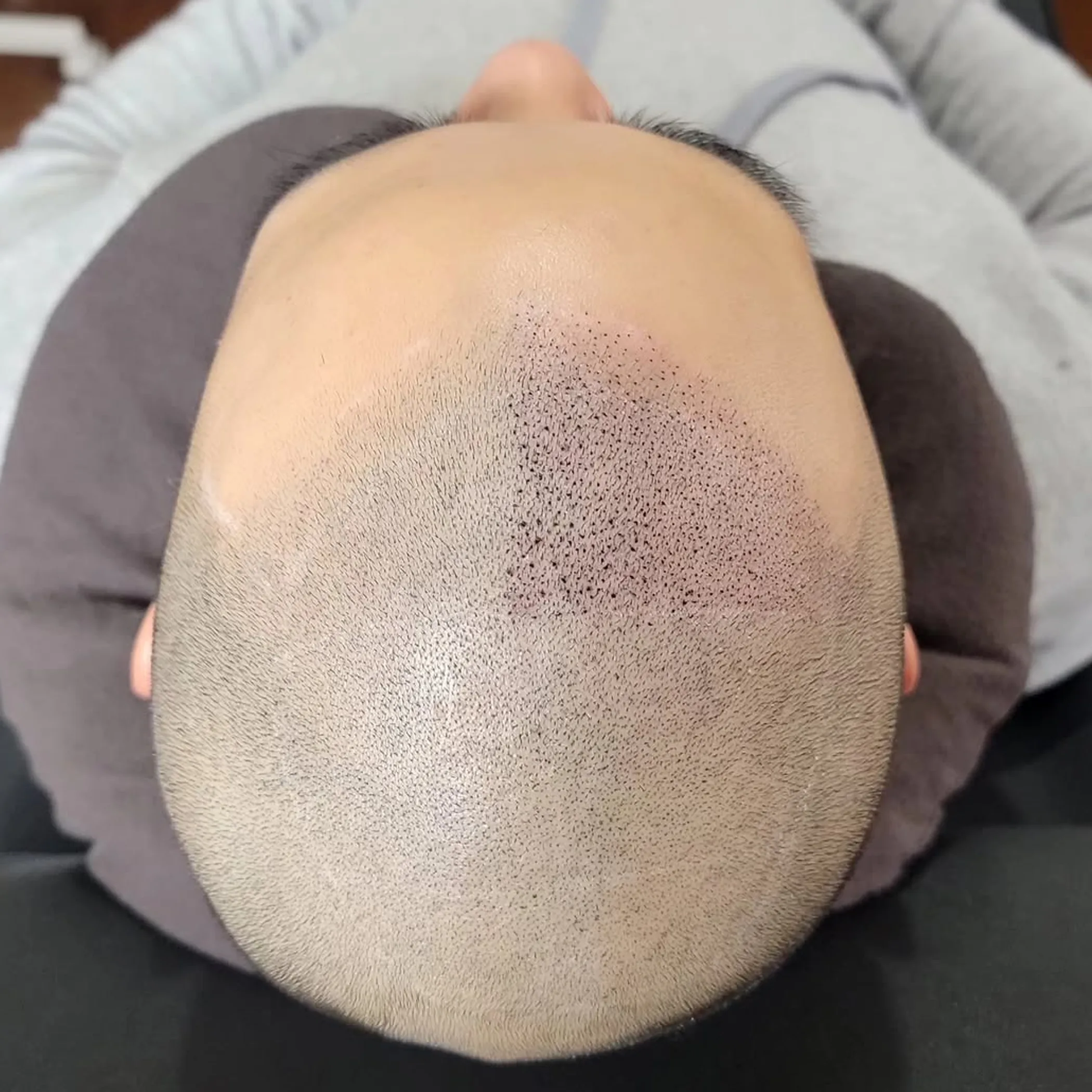
As the surface goes about its business of healing, you will see some light scabbing or crusting. The pigment might have an uneven quality to it, be a little raised or darker in appearance. Resist the urge to pick at crusts as this can irritate and set back the healing of the skin; allow them to come away on their own.
Do not be one of those who thinks every dark speck is superfluous pigment to be washed off. That is a frequent error; in all likelihood it is just part of the normal healing process. You would do well to treat the area with the respect due to healing skin rather than give it the kind of vigorous scrub one might put on a dirty wall.
Temporary Changes (Days 8–14)
Flaking tends to be more apparent from day eight to fourteen. In places the scalp will be lighter, in others darker, leaving it looking something of a patchwork. For some this is a harder phase to take psychologically once the sharpness of the treatment has worn off.
A certain amount of fading is to be expected and is no indication of a failed procedure. Some of the pigment will soften and sit near the surface as the skin sheds. Only when the surface is fully recovered and the pigment has had time to settle can the true result be evaluated.
What You Expect And What Is
The expectation is for the dots to be uniform from the first appointment. In reality there will be changes in colour and definition through the healing process, after the initial rinse and flaking for instance.
One might think that darker pigment equates to a better end product but fresh redness and what is on the surface can be deceptive. A good practitioner will wait to see how things have healed before determining if any further work is called for.
Stabilisation Of The Skin (Days 15–30)
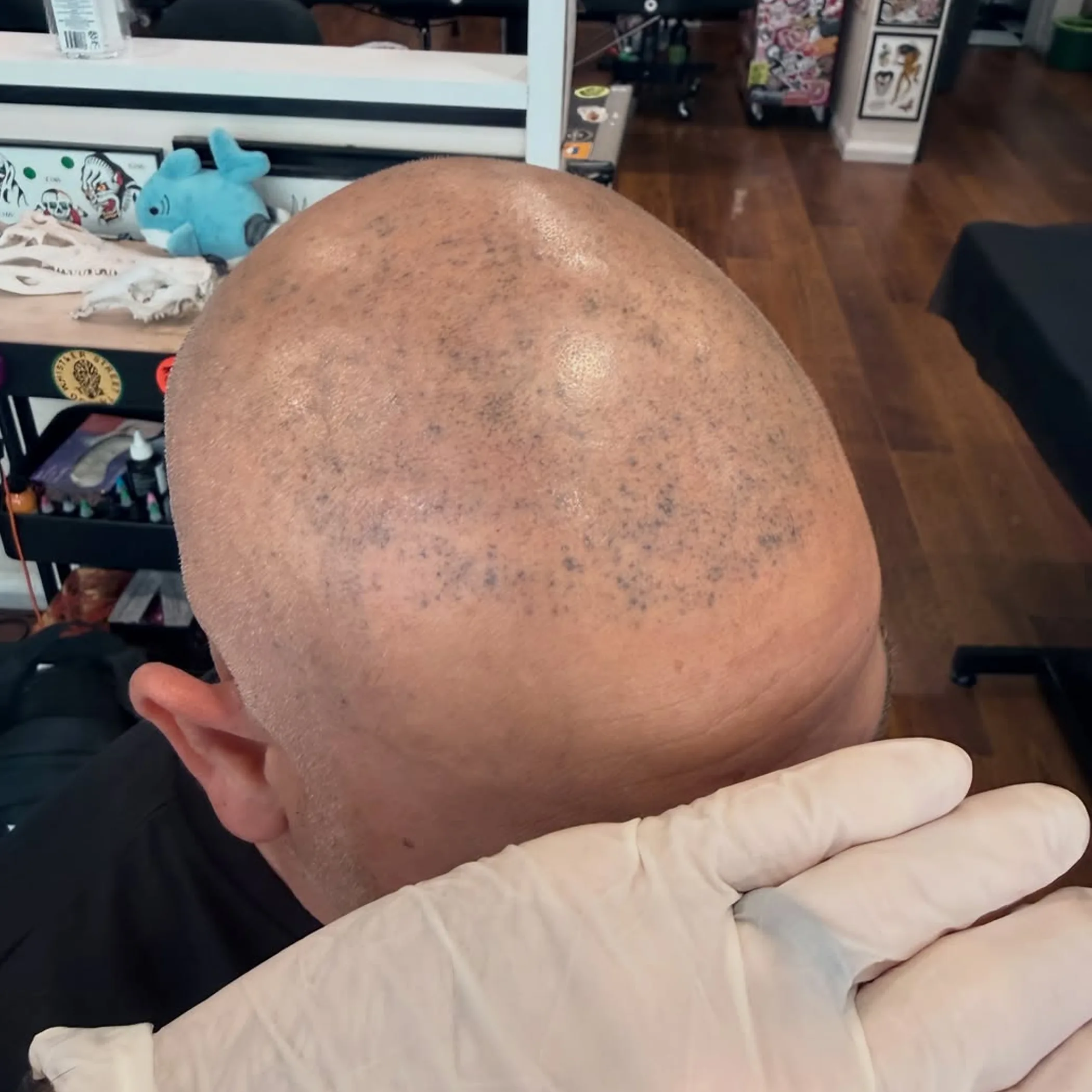
For most, the scalp starts to feel like itself again by days 15 to 30. Any tenderness is gone, flaking is on the wane and the pigment is becoming one with the rest of the skin.
It is now in the settling stage so the dots may not be as hard as they were on the day of treatment, making it easier to spot small variations between sections. But with stabilisation still in progress, do not be in too much of a hurry to make judgements in front of the bathroom mirror under unflattering overhead lights.
Back To Your Normal Routine
With the go ahead from your practitioner, washing, exercise, headwear and work can be taken up again in the course of this period. Should an activity prove to cause stinging or lasting irritation, put a stop to it and seek some advice.
There is nothing to be gained by throwing yourself into everything at full throttle. It is sensible to ease back in, in hot and humid climes where the sweat shows. The Top End’s wet season will leave the scalp feeling clammy while out in the Red Centre the dry air and sun are a challenge of another order.
Touch-Ups At Weeks 4–6
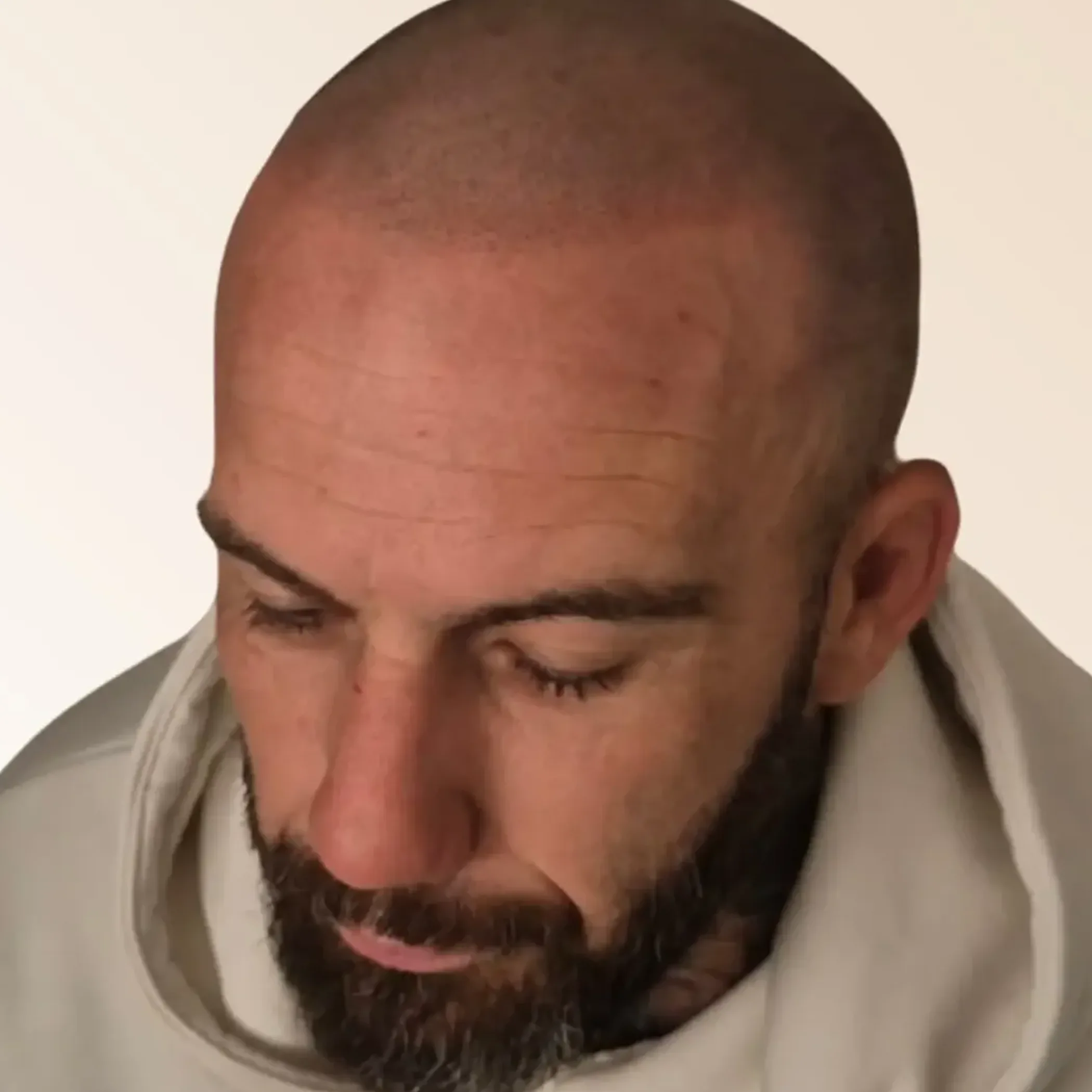
This is the time to review how the SMP has healed and put a timeline to touch-ups. The practitioner will be able to tell if any minor refinement or adjustment of density and colour is in order.
Do not read too much into a touch-up. Scalp micropigmentation is done over several sessions to let the skin respond. The first session is the foundation, the second puts the finishing touches on once healing has shown where the pigment has ended up.
Putting The Next Session In Place
Have the practitioner put the result to the test in natural light and measure it against the plan. Differences may be down to scar tissue, oily skin, the way the light hits the scalp or simply the healing and hair density.
Make sure there is adequate recovery time between booking appointments. Put them too close together and you are only going to stress the skin and find it difficult to judge the outcome.
Aftercare In An Australian Climate
SMP aftercare in Australia is a matter of dealing with the heat, sun and humidity. With a healing scalp a Darwin wet season, a Brisbane summer and a Melbourne winter are worlds apart.
Once the skin has healed to the point of tolerating sunscreen, protection is important. The Bureau of Meteorology has the UV Index and other information to help gauge exposure; be particularly careful when it is 3 or higher.
Sun, Sweat And Washing
Find out from your practitioner when it is safe to put sunscreen on the treated area. Then use a broad-spectrum product as directed and reapply, be it for a long drive or outdoor sport.
During recovery keep out of the direct sun for long periods. A hat will do if it is clean and does not rub, provided the practitioner says so. But do not make a medical device of a dirty cap and put a fine edge on an otherwise simple plan.
Towels, hats and pillowcases should be kept in good order. Do not let others use personal things that come into contact with the scalp. For those who put in a day’s work outside, do not make yesterday’s weather your guide; factor in the UV, wind and heat and take your breaks under cover.
Clinic Logistics
Make an allowance of time for your appointment, more so if you have to cross any sizeable Australian city. Whether you drive or make use of public transport or a rideshare, see that your return is not going to have you hastening through a station in throng or donning headwear that is too confining.
Put some questions to us before we start on the treatment: parking, accessibility, what the terms are for payment and cancellations, and the price of any touch-ups down the line. There is no national SMP rate one can count on from clinic to clinic, and to put forward an average would be as much for show as anything. Have a written quote for the session, aftercare and follow-up.
Contacting Your Practitioner
In the main, symptoms of healing are nothing to worry about and will abate. But should you notice any discharge, fever or malaise, or if the area is hot to the touch, pain is severe, swelling or redness is on the increase, get in touch with your SMP practitioner. Any indication of infection or a pronounced reaction calls for a medical professional to have a look at it. The same goes for trouble breathing, facial swelling or other serious allergic responses; seek care without delay.
A Recovery Checklist
- Observe the washing and product regimen laid out by your practitioner.
- Hands, towels and the like must be clean.
- No picking or scratching, and hold off on swimming, saunas or anything that induces heavy sweating until you are given the all clear.
- Shelter skin that has healed from the sun here in Australia.
- Do not pass judgement on the outcome until the pigment has had its time to settle.
Some FAQs on SMP Healing
One is bound to have questions when the scalp is not the same from one day to the next. Briefly, the healing is a process and what you see may be only temporary.
Healing time for scalp micropigmentation?
Expect 7 to 14 days for the surface to heal; stabilisation of the skin and pigment can run to four or six weeks. It is a matter of technique, the extent of the treatment, how you care for it and the state of the skin.
Is it alright to wash my head?
You can, but not right away and not with force. Your practitioner will indicate when to do the first rinse and which cleanser is appropriate. Better to be gentle with your hands and lukewarm water than to scrub or put on the pressure.
The SMP seems to have faded. Why?
Between day eight and fourteen flaking and shedding can give it an uneven or faded aspect. The colour will soften with the healing of the skin. Let it get to the later stages of settling before you think the colour is amiss.
What about exercise?
Leave the heavy exertion for when the initial healing is done and your practitioner has said so. Friction and the heat of it will irritate the new work. In the Australian climate, with the humidity and heat, a measured approach is best.
Is a touch-up mandatory?
Not at all. Some are content with what was done, for others a session to put some balance or density back in is in order. You will be better placed to decide after a review at the four to six week mark rather than while the scalp is still flaking.
To sum up
Surface healing runs to two weeks, a full assessment up to six. Scabbing, crusting, a bit of tenderness and fading are to be expected, but any sign of infection or pain that is getting worse is a matter for a professional.
Adhere to the aftercare protocol, put some distance between the scalp and our strong UV and do not be in a hurry with the SMP touch-up. I, Simon Redcliffe, would say it this way: leave the skin to its quiet business, keep your hands where they are and let the result reveal itself in due course.