
You could call them interstate driving safety tips Australia and it would be a bit of a dull read. The way I see it is this: put some thought into your planning, have a rest before you need one, make sure the car is in order and do not let your ego dictate how you drive. When you are putting in the miles between states on a run like Sydney to Melbourne mainland route, for instance, the trouble is usually there long before you put the key in the ignition.
Simon Redcliffe here. One learns in time that there is little room for bravado on a good road trip. It comes down to sensible fuel and route plans, taking your breaks, and having the sense to know when the weather has gone rough as guts instead of feigning you can put in another 200k when your mind has already called it a day.
The Non-Negotiables
Put in the sort of quick once-over before an interstate run that will stop a silly error becoming an expensive one. Those unexciting details are what count, particularly when you are hours away from a servo or a signal.
It is seldom a single dramatic breakdown that gets people; more often it is an accumulation of small things. A tyre with low pressure, a battery on its last legs, no water to hand, a patchy connection and a driver who is anything but “fine” but says he is.
- So get a proper night’s sleep. Do not set off in an exhausted state.
- Have a look at your tyres, the spare included, and see to the tread and pressure.
- Put fuel in the tank sooner than you feel obliged to.
- Make sure you have some snacks, water, a charger and first-aid kit.
- While still in metro range, download your maps.
- Verify your registration, licence and insurance are up to date and tell someone where you are headed and when you should be there.
- And everyone in the car should have their seatbelt on.
Get to Know Your Route
There is more to route planning than cutting down on the clock. You want to have an idea of the road conditions, the tiring parts of the journey and where you can pull over. Take the mainland from Sydney to Melbourne, a fairly straightforward corridor in these parts. Yet “straightforward” is not the same as harmless. The monotony of a long freeway, the scenery turning to a flat grey ribbon, and fatigue will come for you if you are not careful.
Then there are the rules of the state
For the most part Australian road rules are the same, but you will find differences in how they are enforced, in the signage and the condition of the road. In Victoria and NSW they are not going to be lenient on drink-driving, speed, mobile phone use or seatbelts. Do not imagine the border is some kind of reset button.
My advice is to consult the government before you head out, should there be any question of access due to fire, the weather or roadworks. For the official line on road safety, refer to Australian Government infrastructure and transport information.
Do Not Be a Hero Over Timing
People put too much stock in what an app tells them. On paper a route is fine until you factor in the coffee and fuel stops, a caravan train, roadworks, the elements and the fact that you are human. Some will make the one-day dash between capitals and can, but an inexperienced driver or one with kids who will make a meal of every toilet break would be better off not trying.
Prepare the Car
None of it is very glamorous but vehicle prep is where your safety on an Australian road trip is founded. A car may be all right around town but after hours at speed in the dark or the rain it is a different story. I have been guilty of the “it’ll be right” attitude because it started well in the driveway, only to have that confidence evaporate when a warning light comes on past Gundagai and there is no help at hand.
Tyres for a start.
Underinflation on a laden car is a danger and getting the pressure right will aid your braking, stability and fuel economy. The spare is no use if it is just for show. Then there is the oil, coolant, wipers, washer fluid, lights, brakes and the battery. If you are near a service interval, have the car seen to before you leave, do not leave it to chance on the way back.
Some Gear to Have on Hand
On an interstate you will want to put in your water, a torch, some charging leads, high-vis and paper or offline maps. Make sure there is something warm for the event of an overnight breakdown. And do not be without roadside assistance; but make no mistake about what your policy actually covers since “assistance” is not a uniform term from one place to another.
Australia conditions are another matter when you leave the sealed corridors for more remote driving. Then you need to put in more food and water than seems necessary and adopt a recovery mindset of a higher order. You can not be making it up as you go along with gravel road safety.
Managing Fatigue
It is easy to think fatigue management is simply a case of not falling asleep, but concentration and the like will get wobbly well before that point. Your reaction time and decision-making are at stake.
Simon Redcliffe has a rule for it: should you find yourself in any way haggling over the need for a break, you have already passed the point of no return. Fatigue is insidious, it will have you believing you are fine until you are not.
Pacing Yourself
Do not wait until you are in dire straits to take a rest. Put in some walking and fresh air, or change drivers. Driver Reviver type stops have their uses in the holidays but they are not to be counted on to be open and convenient wherever you are. The old Think! Road Safety adage of resting and surviving the journey rather than putting the foot down is as good as ever. Coffee is of some help, sleep is proper help.
Reality Check
You might figure two drivers solves the fatigue issue. In practice a long day is draining enough and a drowsy passenger makes for a poor back-up. If you are both short on sleep the second driver is no miracle worker. Nor does rolling down the window cure drowsiness, though it may leave you cold and irritable.
Fuel And Supplies
One does not think much of fuel planning until someone puts it off on a public holiday and finds the servo in the next town is shut. Timings are of consequence even on the major routes in NSW and Victoria where supply is not hard to come by. Off the highway into regional country and you will find some towns close early, roadhouses are not cheap and the distance between dependable fuel can be more than a novice would put down.
Budgeting For It
A run on sealed roads calls for putting aside money for fuel, a night’s accommodation if you are not at ease with the long distances, and your meals. Fuel is the biggest variable cost for most vehicles and routes. As for supplies, a couple of litres of water apiece is sensible, more in the heat, and some unpretentious food that can be left in the boot and stand up to the temperature.
Stops in NSW and Victoria
What you will find from one end of the state to the other is anything from a decent shady spot to a bare patch with a bin and a dunny in need of attention. Do not suppose an ideal place to break will present itself, have a plan in place. With only a day for the run stick to the service centres and do not be pushing on late in the evening. That is when you start to have darkness, impatience and wildlife working against you.
The Hazards

There is usually a combination of things at play in Australia. A roo on the shoulder, wet bitumen, fading light and a tailgater who takes offence to your following distance.
Wildlife is a fact of life here at night and at the change of light. Throw in the weather and an hour later the road is a different proposition. Be wary of kangaroos and livestock, they have a mind of their own. In the signed zones put your speed down and do not swerve at highway speeds, the resulting crash is worse than hitting the animal. People are taken aback by one and think they have seen it all, when there is often another in its wake. Treat such collisions as a routine risk.
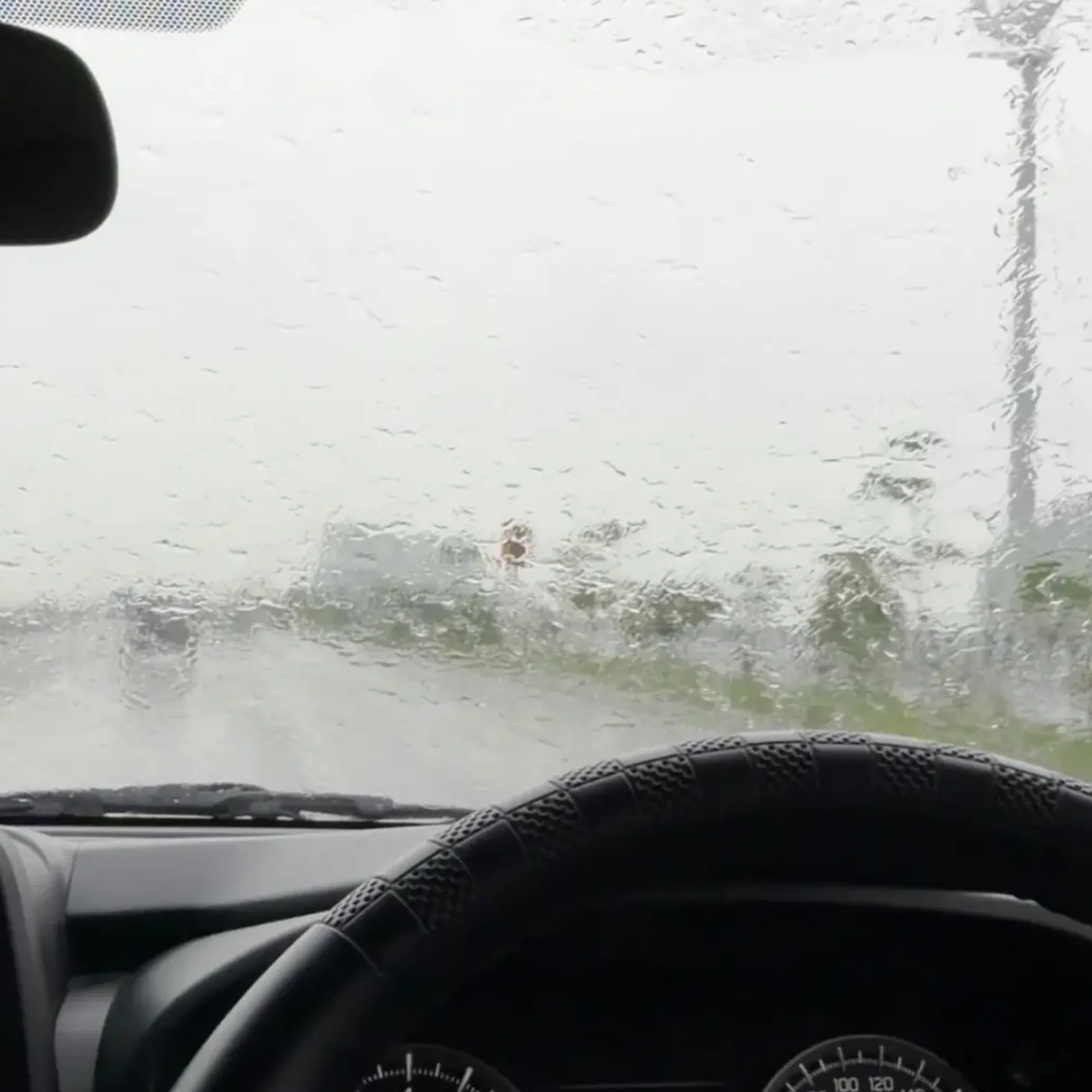
A dry spell followed by rain will leave the roads slick; fog can put an end to your visibility before you are able to get used to it. Then in the summer, southern states may have road sections shut down for bushfires and the north is subject to its cyclones and wet season from about November through April.
Venture outside the interstate corridor to places like the Top End or the Red Centre and you are in for a different sort of planning altogether when it comes to remote driving in Australia. On the Stuart Highway or Gibb River Road one does not rely on the kind of confidence that sees one through a weekend; permits, fuel spacing, recovery plans and the state of the road take precedence.
Road Trains And Heavy Vehicles
In the rural and remote parts of the country the safety rules for road trains are paramount but large trucks are to be found on any major freight route. Be sparing with them, do not make a lazy merge ahead and overtake only if there is a long, unobstructed margin. The National Heavy Vehicle Regulator has put out some guidance on operations and it would be well to heed it: predictability, time and distance are what a truck requires. Hover in a blind spot and be taken aback when it gets hairy at your own peril.
Drive By The Rules, Not Vibes
It is all too easy to let poor judgement show on the interstate where speed limits, overtaking and left-hand driving should be second nature. The length of a trip can be an invitation to think of the road as something of a personal negotiation but it is not. To drive from Sydney to Melbourne in safety is a matter of patience for the most part. Aggressive driving is no way to save time and the risk you run for such a wretched “saving” is considerable.
Common Mistakes On Long Runs
There is the matter of speed creep. In a modern car with good insulation 110 km/h can seem less than it is after a few hours on open tarmac, so put some faith in the speedo and not your instincts. Or the error of an unsafe overtake because one is done with the caravan or truck in front. Unless you can see enough of a clear road to do it properly, hold your position. A risky pass is not going to earn you anything.
Know What To Do If Things Go Pear-Shaped
When you are without signal and between towns a flat tyre or a scuffle with another vehicle is compounded. Better to have a response you have thought through than to be improvising in a fluster on the side of the road. As Simon Redcliffe would say, emergency procedures are not paranoia, they are proper road manners for adults; he would prefer to be over-prepared than be standing in the drizzle by a hot bonnet with Arthur making judgements from the back seat.
Breakdown Basics
Get well out of the way of traffic and behind a barrier if you can, and put the hazards on. Do not put off calling roadside assistance until your temper and your phone battery have both given out. Out in the sticks it is safer to remain with the car than to go wandering. For that reason alone you should have made sure someone was aware of your route before setting off.
Crash And Incident Response
Should an incident occur, put injuries first, then any danger from traffic, then the damage to the vehicle. Where local rules dictate police must be called, do so and make a careful record of the scene. Allianz Australia and others will deal with the claims side of things but your immediate concern is to be safe, to move out of harm’s way and to get help, and not allow shock to call the shots.
Make This Route Your Standard
I would put forward the Sydney to Melbourne mainland route as one to be measured by. There is a good reason for its popularity: it is a direct, sealed and well serviced road. For the majority of drivers looking to make the run between the two capitals in the most straightforward way, this is what I recommend; there is no need to make an endurance test or some unintended foray into the bush out of it.
A family wanting regular amenities, a seasoned highway driver or someone making his first interstate journey will find it to their liking. Not so much for those with little experience who are set on doing the whole thing in one go, or anyone with a dislike for long freeway stretches.
| Section | Typical Feel | Main Watch-Outs | Good For |
| Sydney To Southern NSW | A busy urban exit giving way to a quicker cruise | The ebb and flow of speed, lane changes and traffic density | Getting into the trip |
| Southern NSW Corridor | Highway driving that is long and unvarying | Wildlife when the light is low, any creeping up of your speed and fatigue | Scheduling your rest stops |
| Border Approach | You get to that “nearly there” headspace | Focus waning and overtaking that is more risky than it should be | A change of driver or a decent meal |
| Victoria Into Melbourne | The traffic makes its presence felt once more | Congestion and the impatience of the city | A final push done with care rather than in a hurry |
Then there is the matter of time. Do not be swayed by the most rosy figures a navigator will give you. Put in extra for the weather, for fuel and food, for a few real breaks and the odd bit of traffic. An overnight stay is a wiser and safer proposition for many, even if one could see to grind through it in a day.
Five Questions People Always Ask
You will hear them at the kitchen bench the night before you are due to leave, and rightly so. Uncertainty is the source of most of the stress in interstate driving, the road aside.
The 5 C’s Of Safe Driving?
In a practical sense they are caution, control, concentration, courtesy and care. It means you do not take foolish risks over being late, you keep the vehicle stable and allow room, you drive as the conditions dictate and remain alert.
Is it a problem to have a drink of water while behind the wheel in Australia?
There is no blanket ban on drinking water but if it takes your mind off controlling the car it is an issue. Should a sip cause you to putter about with one hand or miss a hazard, it is better to pull in.
How to put the nerves to rest on the interstate?
By eliminating the unknowns. Make an early start, plan where you will stop, keep to the left until you are ready to overtake and do not put yourself to a marathon on your first outing. Daylight and a shorter corridor are preferable if you are feeling anxious.
Basic tips for Australian roads?
Left side, seatbelts, no illegal phone use, respect the speed limit and do not drive when you are tired. Be aware of the wildlife and have your offline maps and fuel sorted and you will be ahead of most. Factor in the weather as well.
Will a rest stop stave off fatigue?
Not really. They are of some use but cannot put in place a good night’s sleep. Start the trip worn out and all the coffee from the servo and a walk round the car park will not remedy it.
To Come Away From The Trip In One Piece

Australia does not have any showy safety advice for the interstate driver. What you should do is plan beyond what seems necessary and stop before your pride says otherwise. See fatigue and the elements for the hazards they are.
But above all else, bear in mind that the object is not to make quick time and have something to tell people about. You want to arrive with your car and passengers and your composure in order. That is how you win.